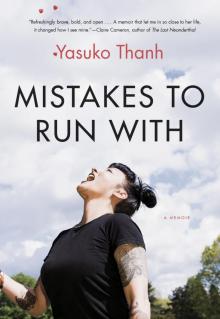
To the bridge, p.1
To the Bridge, page 1



ALSO BY YASUKO THANH
Mistakes to Run With: A Memoir
Mysterious Fragrance of the Yellow Mountains
Floating Like the Dead: Stories
HAMISH HAMILTON
an imprint of Penguin Canada, a division of Penguin Random House Canada Limited
Canada • USA • UK • Ireland • Australia • New Zealand • India • South Africa • China
First published 2023
Copyright © 2023 by Yasuko Thanh
All rights reserved. Without limiting the rights under copyright reserved above, no part of this publication may be reproduced, stored in or introduced into a retrieval system, or transmitted in any form or by any means (electronic, mechanical, photocopying, recording or otherwise), without the prior written permission of both the copyright owner and the above publisher of this book.
www.penguinrandomhouse.ca
Publisher’s note: This book is a work of fiction. Names, characters, places and incidents either are the product of the author’s imagination or are used fictitiously, and any resemblance to actual persons living or dead, events, or locales is entirely coincidental.
The author wishes to acknowledge the support of the Canada Council for the Arts and the BC Arts Council.
LIBRARY AND ARCHIVES CANADA CATALOGUING IN PUBLICATION
Title: To the bridge : a novel / Yasuko Thanh.
Names: Thanh, Yasuko, author.
Identifiers: Canadiana (print) 20220423431 | Canadiana (ebook) 20220423458 | ISBN 9780735244672 (softcover) | ISBN 9780735244689 (EPUB)
Classification: LCC PS8639.H375 T6 2023 | DDC C813/.6—dc23
Book design by Kate Sinclair, adapted for ebook
Cover design by Kate Sinclair
Cover images: (cut paper) © MirageC / Getty Images; (waves) Crashing Waves, oil on canvas, Alfred Thompson Bricher (1837-1908)
a_prh_6.0_143670463_c0_r0
Contents
Cover
Also by Yasuko Thanh
Title Page
Copyright
Dedication
Epigraph
Chapter One
Chapter Two
Chapter Three
Chapter Four
Chapter Five
Chapter Six
Chapter Seven
Chapter Eight
Chapter Nine
Chapter Ten
Chapter Eleven
Chapter Twelve
Chapter Thirteen
Chapter Fourteen
Chapter Fifteen
Chapter Sixteen
Chapter Seventeen
Chapter Eighteen
Chapter Nineteen
Chapter Twenty
Chapter Twenty-one
Chapter Twenty-two
Chapter Twenty-three
Chapter Twenty-four
Chapter Twenty-five
Chapter Twenty-six
Chapter Twenty-seven
Chapter Twenty-eight
Chapter Twenty-nine
Chapter Thirty
Chapter Thirty-one
Chapter Thirty-two
Chapter Thirty-three
Chapter Thirty-four
Chapter Thirty-five
Chapter Thirty-six
Chapter Thirty-seven
Chapter Thirty-eight
Chapter Thirty-nine
Chapter Forty
Chapter Forty-one
Chapter Forty-two
Chapter Forty-three
Acknowledgments
About the Author
for Talitha
But behind all your stories is always your mother’s story, because hers is where yours begins.
—Mitch Albom, For One More Day
one
When my mother died, I used to wonder how anyone could become so broken that they’d want to end their own life. Now I’m a mother myself, at this mathematical point in time, waking in alarm, the digital clock screaming “Wah-wah-wah. Get up, get up, your life is shit: you’re not making enough money, not making enough love, not making good. You’re late for something. Wah-wah-wah.”
Then I’m in a hospital bathroom with handrails, Juliet on the toilet, pee tinkling in the bowl. “You’ve heard of a thing called privacy, right?”
“You surrendered your right to privacy when you tried to kill yourself.” I say those words, “kill yourself,” aloud for the first time.
“There’s nothing for me to kill myself with in here,” Juliet says, wiping in disgust, flushing, pushing her IV pole back to bed. “You’re making too big a deal of this.”
She tangles herself in the tubing, cannula bruises on her arm like the defence wounds of an assault victim, and as I help her manoeuvre onto the mattress I say, “Stealing a tube of lipstick is not a big deal. Failing an exam. Staying out all night. But life and death? That’s as big a deal as it gets.”
“What-ev.” A sadness, the sadness of having survived, passes over her face. Then she’s back to smiling as though this is a gory horror movie she’s watching, not starring in.
I will remember the two of us, my daughter and I, sitting on her bedroom carpet at home. Her face green-seeming in the morning light. Haloed like an apocryphal angel. I will, in years to come, recall her lips not moving but her voice clear as a bird. “Last chance to dance. Bet it all. Let it ride.” I will recall Juliet’s birth, her hand in mine. I will learn that a day can start out as utterly ordinary and then transform itself in such a manner that by dusk you realize everything you love can be taken away.
* * *
A day before the grind began, I turned off the alarm clock and lay in bed asking myself unrhetorically how it would feel to wake up happy for a change. Because as much as growing older meant admitting certain of my dreams had best-before dates, I’d dusted off my long-range lenses and begun to circle the globe with my finger for the first time in years.
My husband Syd wrangled the recycling in his bathrobe. I turned the coffee on, and fought the urge to smoke a cigarette on the front step, making myself believe I didn’t want one, though the first cigarette of the day was always the best one, and the hardest to give up—mist all around, a breeze rattling the wind chime, seagulls squawking—then wrestled the garbage bin down the rutted driveway, a good mother anchored, in the words of Sophocles, to life.
I was determined to see Juliet succeed. She was everything good in the world. Great, even. And to see something I’d brought into the world be great justified my investment as a parent. Juliet was on a scholarship track to university. “Apply everywhere,” I’d encouraged. “Give yourself the broadest range of choices.” Our family had had its troubles, but in ten months she’d be gone and her old bedroom would become my darkroom, or a storage room for the mid-century clothes I sold online, anything. Syd and I had made it through the tunnel; we could see the light of freedom. Freedom. Well, I’d just throw myself at life and see what I stuck to, what stuck to me, the thing I wanted most also being what scared me the most.
I shuffled back inside past a pile of flip-flops, hoodies on hooks, snagging my foot on the brown and yellow shag rug, catching myself on the wooden cradle holding gumboots.
Juliet opened her door a crack. “Can I talk to you a minute?” Her body faded into the perpetual darkness behind her.
“Sure thing.”
I poured the day’s first cup, sloppy in my hand, and then returned, coffee sloshing, to Juliet’s room. The day’s first coffee attracts chaos; being a good parent hinged on how quickly I responded to Juliet’s needs. Spit out words. Smile with an effort ingrained by years of practice at hiding my feelings, hoping Juliet wouldn’t detect the tension beneath my disguise. In parenting, as in life, selfishness battled duty; they may as well have been best friends, these enemies who relied on each other for the very fight that defined them.
Wearing this mask (like a therapist, or a priest), I knocked softly, walked in. “What’s up?”
I pushed aside Juliet’s sketchbook, looseleaf, library books, and half a carrot to sit cross-legged on the floor, coffee steaming. I made a mental note to do the rounds later, collect her dirty laundry with my red plastic hamper. I deferred my nagging, though there was much to nag about, noticing as I adjusted to the pale gloom what lay around me on the grey utility carpet: a salad bowl filled with some kind of semi-opaque liquid and a couple of kitchen pots, all three emitting a sour smell.
I remember the smell. The ivy vine I’d overwatered, killed, and thrown in the garbage a couple of days ago, rescued and now in a paper cup on her windowsill. Juliet’s pallor, her face the shade of Jadeite dishes.
She sat down cross-legged on the floor in front of me. Enfolded in an old tracksuit and a baggy, shapeless grey cardigan, fraying, a hole at the elbow. Her hair greasy. “Is it okay if I miss school tomorrow?”
“It all depends on the why.”
Vomit in the bowl, in the pot.
Hangover.
Juliet hungover?
Electricity prickled the hair on the back of my neck. I saw a mini montage of me as a teenager, and before I could launch into a spiel about underage drinking and throwing your life away, Juliet added, “Actually, could I take a few days off?”
“I guess that would depend on…”
The vision morphed.
Not hungover. Pregnant.
Morning sickness.
Sixteen and a mom?
We’d work through this. I’d stay home while Juliet finished school. I ran with other scenarios. She may want an abortion. I looked from the bowl to the pots and waited. And then what did I ask? If she was sick? If she was pregnant? No. Instead I smiled to reassure her. When someone you know is in trouble, shut your mouth and open your arms.
I removed all judgment from my voice: “What’s the deal?”
I’m still reeling from her next words.
“I tried to kill myself,” she said.
* * *
The carpet’s industrial weave rasped my legs. I shook my head, muttering, “No, no, no,” the floor my only security. I didn’t yell, “What the fuck? How could you?” but nor did I scoop her up in my arms and hug her tight and say, “Everything’s going to be okay, don’t worry, I’m here to look after you.” I wanted to be the carpet. I wanted to melt into its fibres.
I tried to kill myself.
Her words repeated in my mind, their import hitting me in the face like the metaphorical slap.
Shock, of course, reset the system. Recoded the body. My cortex tried to take it all in: Juliet’s bedroom in October. Two weeks shy of Halloween. Rain and fog beyond the double-hung windows. The two of us sitting on Juliet’s carpet. A grey halo around the window blinds. Juliet’s loft bed. First cup of coffee of the day in my hand. Evaluate. Make a decision.
Why was this happening?
Did it matter? Why was for later. For now, what was I going to do? Become aware of the ridiculousness of former ordinary things? The coffee mug in my hand, hot, still spinning out steam? Music coming through the ceiling? The pinging of the portable radiator? The hum of the bathroom fan?
I was trapped in the why even as I was yet to establish the when and what and how, yet to assess the severity of Juliet’s physical symptoms, yet to decide whether to call 911 or find her a psychologist. Trapped in an apocalypse, in the ancient Greek sense of an unveiling.
A mystery. A thing I didn’t understand.
I didn’t need to. Because the ascribed importance of what we did, get married, dream, make goals, make love, have children, ignored the make-believe of who we were. What we made ourselves believe in. What was important was how to move, how to get up from the carpet, how to open my mouth and make words come out, how to do this. I could do this.
Coffee swirling, upstairs music wafting down.
To look at my child, this person I’d once carried under my heart, standing at the precipice over a void…Any attempt at calm efficiency would be difficult.
“How?” I asked. (How did you try to kill yourself? In despair? In acute pain?) “How?” (Could such an act of violence ever find its roots in logic?)
“I took a bottle of Tylenol. But don’t worry, Mom, I puked it all up.”
“How much did you take?”
“The whole bottle.”
Oh God. “Do you still have it?”
Juliet passed me the Tylenol box, her nails chipped, and the bottle, value-pack size. I shook it, then read the warnings. “When did you take these?”
“Most I took Friday, some Saturday.”
It was Sunday now. I reached across her desk, an old hand-painted door on cinder blocks covered with stickers, to grab her laptop. I googled Tylenol overdose and amounts. The computer asked me if I meant t-y-l-e-n-o-l; I clicked yes. The first website said Tylenol didn’t kill all at once.
“It took a while. I kept gagging. The pills were so sweet,” Juliet said.
I tried to understand. I didn’t understand. Friday. Saturday. There’d been nothing out of the ordinary then; it made no sense.
In the months to come I will try to parse Juliet’s life and my life, detective-like, create order, analyze scraps, give my confusion words, my head like an evidence room stuffed so full of unanswered clues that its door is no longer closing, it groans under its own weight, its floorboards bowing.
“I only told you because it didn’t work.”
The estimated lethal dose of the drug is ten grams in one day. Liver damage has been described from six grams onward, unless an antidote can be administered in time.
I grabbed a piece of paper to do the math. Fifty thousand milligrams of Tylenol, two days. I took away the zeros. Fifty thousand milligrams equalled fifty grams, right? Thirty-six hours or so. We were still in the safe zone, right? Oh, Lord. We were only now entering the danger zone.
I did not make these findings known to Juliet.
“I puked yesterday morning, and night. And Friday night.”
“Friday night?” It was going to be okay because she’d puked. That’s what the hospital had people do. Throw up. Or was it feed them charcoal? “How are you feeling? Right now?”
“My stomach hurts a little, but it’s not too bad.”
When to Seek Medical Care
You must call a doctor, a poison control center, or emergency medical services for any suspected acetaminophen overdose.
In the Comments section a retired general internist, a former intensive care physician, had written: “It is a terrible way to go. It takes days while your liver totally fails, you feel nauseous, regret your deed, then, if no liver transplant can be done, die miserably.”
I learned, to my dismay, that Tylenol, a stealthy warrior, dug in with time, gained force. I learned that Juliet had been wrong about its having failed, and I offered a prayer of thanks for the sole reason that it meant she’d actually told me. In fact, the warrior roaming Juliet’s system had been growing stronger. With Tylenol the danger came forty-eight to seventy-two hours after ingestion. Even in a hospital, those who ODed sometimes died.
“It took me so long to get them down. After downing about half the bottle, I nearly gave up.”
“I think maybe we should go to the hospital,” I said evenly, words that at their heart meant Where did I go wrong? Everything I’d believed, hoped for, thought I had, my biggest accomplishment, a daughter, a happy family, a lie.
“Nah. I don’t feel like going anywhere. I’d have to take a shower.”
I snapped down the computer lid. Juliet’s skin had paled to the shade of ear wax. Not wanting to alarm her—did fear make the poison travel faster?—I said, “Let’s just go and get you checked out, just to be safe.”
“Do I have to?”
If she refused would I throw her over my shoulder kicking and screaming in my ear like a child refusing to leave the playground?
Juliet was a stranger, a green face, still sitting cross-legged in the spot where I’d once had a daughter.
I took a deep breath and feigned calm. “It won’t take long. It’ll be an adventure. It’ll be fine.”
She shrugged. Knowing the moment could flip on a dime, while she was putting on her shoes I ran out to the hallway then up the steep stairs to the loft. In the middle of the floor Syd sat on our mattress listening to Deep Purple.
“We need to go to the hospital,” I said. I kept my voice steady. “Juliet tried to kill herself.”
two
Syd pulled his coat over his bathrobe. Then we were leaving the house, driving down the road, and I turned to Juliet beside me, resting her head against the window.
“How you feeling?”
“Greasy. This is stupid. Can we go home?”
Syd stared straight ahead.
We approached the hospital’s looming big red EMERGENCY sign. Syd stopped in the turnaround outside the automatic doors. “I’ll get parking. I’ll find you.” Juliet and I slid from the truck; for an instant, I imagined Syd dropping us off, pulling a U-ie, driving home, and leaving us stranded there. The automatic doors opened to swallow us like a big mouth.
* * *
Hospitals should be a place of light, like the seaside, where one may find healing; instead we moved through the bowels of a beast that breathed from vents and exhaled into rooms Dickensian with suffering. The walls were chipped from stretchers clipping corners at high speeds, brittle with pain. We found the reception area where a sign told us to take a number, like at a deli, and I wanted to reverse time as I went through the motions, settled Juliet in a chair, pulled a paper tongue from the dispenser, lacking words of comfort or counsel as we waited, three people ahead of us, including a man whose injured hand was wrapped in dish towels.