Gladstone: A Biography

Gladstone: A Biography

Roy Jenkins

Roy Jenkins

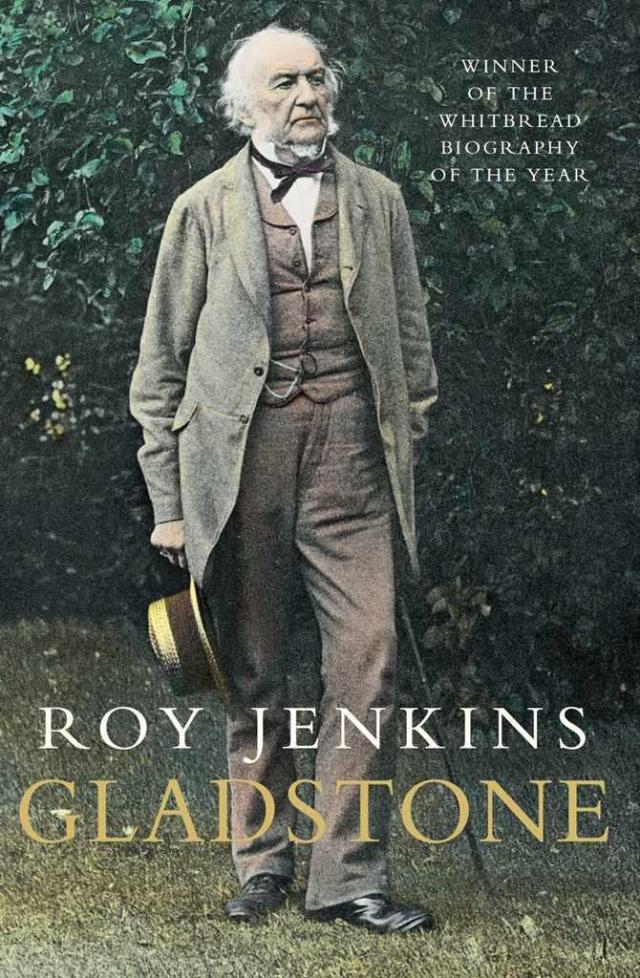
From the New York Times bestselling author of Churchill, a towering historical biography, available for the first time in paperback.William Gladstone was, with Tennyson, Newman, Dickens, Carlyle, and Darwin, one of the stars of nineteenth-century British life. He spent sixty-three of his eighty-nine years in the House of Commons and was prime minister four times, a unique accomplishment. From his critical role in the formation of the Liberal Party to his preoccupation with the cause of Irish Home Rule, he was a commanding politician and statesman nonpareil. But Gladstone the man was much more: a classical scholar, a wide-ranging author, a vociferous participant in all the great theological debates of the day, a voracious reader, and an avid walker who chopped down trees for recreation. He was also a man obsessed with the idea of his own sinfulness, prone to self-flagellation and persistent in the practice of accosting prostitutes on the street and attempting to persuade them of the errors of their ways. This full and deep portrait of a complicated man offers a sweeping picture of a tumultuous century in British history, and is also a brilliant example of the biographer’s art.
Read online
  • 69
Mr Balfour's Poodle

Mr Balfour's Poodle

Roy Jenkins

Roy Jenkins

The House of Lords', said Lloyd George in one of his great platform orations of the years before 1914, 'is not the watchdog of the Constitution; it is Mr Balfour's poodle.' And it yapped at the heels of the Liberal Government of 1906 until one of the most bitter and prolonged constitutional struggles of modern English history was precipitated. The main battle was joined with the introduction of the 'People's Budget' of 1909, and it continued through two general elections, a change of reign and an ineffective constitutional conference, until August 1911, when late one night, in the hottest weather within living memory, the House of Lords accepted the Parliament Bill by a majority of seventeen. Roy Jenkins's account of these stirring events was recognised as definitive on its first publication in 1954, and it has since come to be regarded by many as a classic. It is a vivid description of one of the most dramatic periods of this century's political life, with sharp and enjoyable...
Read online
  • 69
European Diary, 1977-1981

European Diary, 1977-1981

Roy Jenkins

Roy Jenkins

This diary provides the background to two vital issues: our relations with the European Community and the state of politics in Britain. Few people are better qualified to know how we arrived where we are than Roy Jenkins. During the period of this diary he was President of the European Commission. The diary provides a picture of the day-to-day life of the head of an international organization, of the conflicting pressures and grinding routine, of the importance of personal relationships with world leaders such as Helmut Schmidt, Valéry Giscard d'Estaing, James Callaghan, Margaret Thatcher, Willy Brandt, Jean Monnet and Jimmy Carter. In addition to the political chronicle we have frank and sometimes unguarded revelations about the author, his tastes and preoccupations, from which emerges a man more imbued with public passion, more eccentric and with a more varied private life than many readers may expect. His subtle perception of people is revealed in brilliant portraits of, for...
Read online
  • 26
Truman

Truman

Roy Jenkins

Roy Jenkins

In his time, Harry S. Truman was one of the most under-rated presidents of the twentieth century. Succeeding the charismatic Roosevelt, he was often seen as an uninspiring leader, a poor diplomat and a fumbling politician. He was the first man to authorise the use of nuclear weapons, and was in office at the time when the multiplicity of hopes which arose at the end of the Second World War were inevitably disappointed. Nothing could be further from Roy Jenkins' view of him. This is the first biography of Truman to be written by an author with anything approaching the subject's own range of political experience, and Roy Jenkins brings to this book a quality of appreciation of Truman's political skills which has not been seen before. It is also the first biography to be written by a British author, giving it a new objectivity on the international affairs which occupied so much of Truman's presidency and by which he must be judged.
Read online
  • 26
Dilke

Dilke

Roy Jenkins

Roy Jenkins

Sir Charles Dilke was born in 1843 and died in 1911. His career is one of the mysteries and tragedies of nineteenth-century history. In the summer of 1885 he was the youngest man in the outgoing cabinet and Gladstone's most likely successor as leader of the Liberal Party. But his great expectations were shattered when in July 1885 Donald Crawford, a Liberal candidate, began divorce proceedings against his twenty-two-year-old wife, citing Dilke as co-respondent. There were two hearings, during the second of which Mrs Crawford made the most sensational allegations and in the end Dilke lost. He maintained his innocence to his dying day and despite his public disgrace there were many who believed him. First published in 1958, Dilke is a story with a climax as exciting as it is mysterious and which bears continuing relevance to the private lives of public figures.
Read online
  • 24
Portraits and Miniatures

Portraits and Miniatures

Roy Jenkins

Roy Jenkins

In Portraits and Miniatures, Roy Jenkins brings his penetrating intelligence and elegant prose to subjects ranging from literature and political history to wine and croquet. Long experience in both Houses of Parliament and as President of the European Commission has given him unparalleled insight into political figures such as R. A. Butler, Aneurin Bevan, Konrad Adenauer, and de Gaulle. A varied selection of essays, Portraits and Miniatures is fascinating, witty, and endlessly entertaining.
Read online
  • 17
Baldwin

Baldwin

Roy Jenkins

Roy Jenkins

This is the first biography of Stanley Baldwin for more than ten years, although there had been four in the preceding decade. This is strange, for Baldwin has recently begun to swim back into fashion. In part this is a function of growing nostalgia for his period of power, the 1920s and 1930s. Still more, however, it is because Mrs Thatcher's brand of Conservative leadership has made him an object of contrasting interest in a way that Harold Macmillan's or Edward Heath's never did. When a new exponent of an alternative style temporarily achieves notice, it is now frequently suggested that he might be a new Baldwin. This reappraisal is therefore appropriately timed. It is written by a skilled political biographer, from a non-Conservative, although not personally unsympathetic, standpoint.Baldwin was born in 1867, the son of a rich Worcestershire ironmaster, and educated at Harrow and Trinity College, Cambridge. He then worked in the family business for twenty years. Although the most self-conscious countryman amongst British Prime Ministers of the past hundred years or more, he was not a country squire and never owned more than a few acres of land. He did not enter the House of Commons until he was forty, and was not even a junior minister until the threshold of fifty. Less than six years later, in 1923, he became Prime Minister and dominated British politics for the next fifteen years - the only man of this century to hold the highest office three times.About the AuthorElected to Parliament as a Labour member in 1948, Jenkins (1920- 2003) served in several major posts in Harold Wilsons First Government and as Home Secretary from 1965-1967. In 1987, Jenkins was elected to succeed Harold Macmillan as Chancellor of the University of Oxford following the latters death, a position he held until his death. Jenkins grew to political maturity during the twilight of a great age of British parliamentary democracy. As much as Churchill, though in quite a different way, Jenkins has been from the cradle a creature of the system that nurtured Palmerston and Disraeli, Gladstone, Asquith and Lloyd George.
Read online
  • 15
Asquith

Asquith

Roy Jenkins

Roy Jenkins

First published in 1964, Asquith was one of the most crucial and controversial of modern Prime Ministers. He was opposed with a bitterness and a violence that English politicians have not subsequently known, yet he enjoyed eight and a half years of unbroken power, and for at least the first six years of these he presided with an easy authority over the most talented government of this century. The issues which he confronted were momentous – Peers v. People, Ireland, and the Great War. Bringing to bear exceptional knowledge, judgement, insight and tolerance, he survived them all. His fall seemed therefore all the more shocking.
Read online
  • 10
183