The little witch, p.1
The Little Witch, page 1


Begin Reading
Table of Contents
About the Author
Copyright Page
Thank you for buying this
Tom Doherty Associates ebook.
To receive special offers, bonus content,
and info on new releases and other great reads,
sign up for our newsletters.
Or visit us online at
us.macmillan.com/newslettersignup
For email updates on the author, click here.
The author and publisher have provided this e-book to you without Digital Rights Management software (DRM) applied so that you can enjoy reading it on your personal devices. This e-book is for your personal use only. You may not print or post this e-book, or make this e-book publicly available in any way. You may not copy, reproduce, or upload this e-book, other than to read it on one of your personal devices.
Copyright infringement is against the law. If you believe the copy of this e-book you are reading infringes on the author’s copyright, please notify the publisher at: us.macmillanusa.com/piracy.
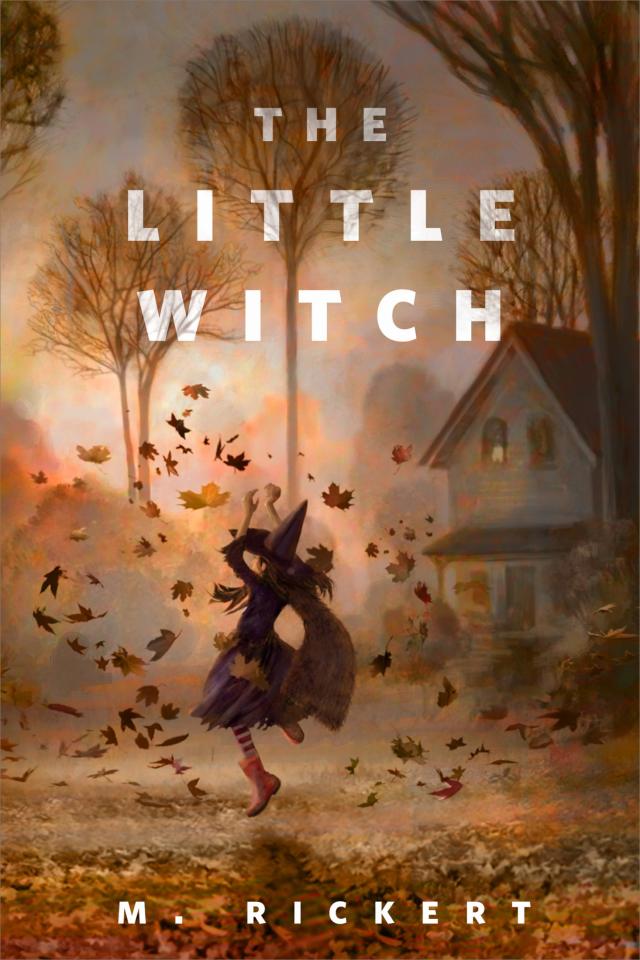
The first time I saw her, I remarked on her footwear. “Oh, you’re a red-boot witch,” I said, and shared a brief conspiratorial laugh with a woman I assumed was the mother. The little witch did not join in, however. She looked up at me with a solemn gaze, gray eyes serious beneath the wide brim of her black hat, and I felt chagrined. Hadn’t I vowed, when I was young, to never be one of the adults behaving just as I was then, laughing at a child under the guise of charm? Because of guilt I told her she could have two candies, and watched her little hand, fingers small as sticks, fingernails like glass, searching through the bowl until she found two of the exact same tiny chocolate bars, and then another.
“Did you say thank you?” the woman asked. The little witch looked up at me as she dropped her contraband into the hole at the top of the pumpkin’s head.
“Yes, she did,” I lied, and only then did the child smile, if you could call it that, devoid as it was of mirth. As they walked away I observed a distance between them as if adult and child had come to some sort of truce. She walked boldly, that little one, in her red boots, creating enough of a stir to cause her cape to float aloft behind her.
Every year a few trick-or-treaters set in my mind, individuals amongst the pack, and that year she was one of the remembered. After the last candy was dropped—wearily—into a plastic bag’s maw, lights turned off and candles blown out, I retired to bed, shivering beneath the stack of quilts because a chill had gotten into my heart. When I finally closed my eyes, I saw the little witch stealing that extra chocolate, which is how it came to be that I fell asleep smiling for the first time in quite a while. I barely gave another thought to her, however, in the year that passed between one visitation and the next. The holidays arrived with the increased tempo life had established as a contrapuntal to my own increasingly measured pace. Because I had seen what happened to people who thought they could continue moving about as though their bones had not grown old along with their skin, I hired a boy to do the shoveling. He did sloppy work for which I paid five dollars. I considered him a borderline crook and was quite unhappy with our arrangement until he broke his leg and turned the job over to his sister. She cut neat lines down the walk and driveway, then finished with a sprinkling of salt. Sometimes I watched from my bedroom window, marveling at her strength. I thought we would like each other but she had no interest in becoming my friend. She plucked the five dollars from my hand as though fearful that by touching me she would be contaminated. “Your body will change too,” I muttered, watching her run down the safe path she had cleared.
I did not mean it as a curse and was severely distressed to learn of the accident that severed her fingers. Not all of them. I was never clear how it happened exactly, but by that time it was spring and her services no longer needed. I sent over a cranberry pie nonetheless, and a note, though neither was acknowledged in any way. Shortly thereafter the entire family began the distressing practice of crossing to the other side of the street at my approach, which caused me to suspect the cranberries had been sour.
Spring was welcome, as it always has been, followed by summer, which was, of course, too hot and too short. Then—and it seemed all at once—the leaves were gold and red, the sky a wooly gray, pumpkins appeared in the neighborhood gardens as if grown overnight through October magic, and I was standing in my doorway greeting the little witch in her red boots.
“Why, you’ve hardly grown at all,” I said, then bit my lip, worried I hurt her feelings. Age had unleashed me as unkind in ways I never would have imagined when I was young. “Go ahead,” I said. “You can have three.” Of course she took four.
I searched her face for signs of humor, but her gaze remained steady, so I looked up at the woman, thinking we could share a smile, though she stood outside the porch light and might as well have been composed of shadows as blood and bone. By the time I turned back to the little witch she was walking down the stairs, her cape blown aloft, each leg in turn, jutted straight out before her like a little Nazi. I wondered if the boots were too large for her small feet and if she had adopted the peculiar gait to compensate.
I went to bed that night with a raging headache, tossing and turning against all my shortcomings. I should have asked more. I should have knelt down, looked into those gray eyes, and whispered, “Are you all right?”
The next year I did, peering closely at her face for signs of age not evidenced in her size. I realized she might be one of those people who would never grow tall, but when I summoned all my strength to lower my body to kneel before her, I looked into the face of a child, even if her gaze was preternaturally solemn.
“Are you all right?” I whispered as I extended the bowl toward her.
She looked at me with her hand hovered above the treats; I guessed she was waiting for permission so I nodded, and she thrust into the pile of candy with fingers splayed as spider legs, scooping up considerably more than her share.
“What’s your name?” I asked.
She was so intent on stuffing her pumpkin I wasn’t certain she would answer, but once the last candy was settled she returned my curious gaze with her own. “Alice,” she said, then shocked me by speaking further. “What’s yours?”
I had taken no notice of her companion, and was startled when I heard a peculiar noise coming from the shadows, a short abrupt sound that seemed more bray than cough and, indeed, was taken aback as I turned to see the figure obscured but for twisted horns that rose from its head, alabaster against the dark.
I didn’t have a chance to answer Alice’s question; she was already hurrying away in a manner I had not seen her employ before, moving so quickly that not only did her cape bell out behind her but fallen leaves rose as some kind of tempest when she passed, then settled all at once, as if admonished by the horned figure that followed.
I felt, suddenly, both weighed down as if some spectral shawl had settled on my shoulders, and hollowed out as a jack-o’-lantern. In that state, I placed the bowl of treats on the top step and went back inside to sit with Gerta, the cat who’d recently come to live with me. Even with the doors closed tightly against their invasion, I was able to hear the soft footsteps of children who politely selected a single candy, perhaps two, then continued on their way. It wasn’t long at all, however, before the noise was that of youth with heavier footsteps followed by shouts and laughter, which I would not have minded had the sound carried a happy tenor rather than derisive glee. Sensing my irritation, Gerta jumped off my lap, and I went to the porch to retrieve the bowl, tossed on the brown grass—empty, of course.
“Naughty children,” I mumbled. “What becomes of such wicked creatures?” I took the bowl inside and went to bed, later awoken from a nightmare of blood and screams when Gerta curled beside me on the pillow, purring loudly.
I spent the next day getting to know my neighbors. It turned out I had been right to ignore them all the years before. They were rude people. Even the woman who lived in the darling yellow house with the swag of autumn leaves draped around the door sneered, as if I wore garbage for perfume, when I asked if she knew anything about the little red-boot wearing witch.
“She comes every year,” I said. “Her name is Alice.”
“Well, what do you want with her?” Ms. Yellow House asked.
“I don’t know exactly,” I lied. “I suppose to make sure she is all right.”
“Why wouldn’t she be?” the annoying woman asked.
“She hasn’t grown. Not an inch.”
Ms. Yellow House began slowly closing the door, as if one of us might become violent at any sudden movement, but I stuck my foot in to stop it, which caused her eyebrows to jump halfway up her forehead, and her mouth to drop open.
“Also, her guardian appears to be a goat,” I said.
“I’m going to call the police.”
“Good idea,” I said, and removed my foot. I sat on the front step to wait, remembering a time when folks didn’t leave visitors to chill on their stoop but, clearly, that was not the time I was in.
Several gold leaves spiraled down from the neighbor’s oak when a crow landed in the branches with a harsh caw, soon followed by the piercing wail of sirens that screeched, from various directions, to a central point that sounded close. So many crows arrived, the gold became thoroughly tarnished. I knew what that meant.
I followed the trail of bloodred noise until I could go no farther because the policewoman blocked my way. I peered down the road at the scene of an acciden t involving one car and an electric pole. Halloween candy littered the street around two piles of bloody clothing, which I thought made no sense until I realized they were bodies. The police appeared focused on administering aid to the source of screams from inside the vehicle. When a paper blew over my shoe, I looked at it long enough to note schoolwork before releasing it, pausing on my way home to pick up a few pieces of wrapped chocolate for solace.
It was several days before anyone followed up on Ms. Yellow House’s call. The policewoman looked familiar but it was a few minutes before I realized she was the one who had blocked me from the accident where four teenagers died.
Unlike my rude neighbors, I invited Officer Sharon inside. When she told me to call her that I wondered if it was the best approach for a woman doing such serious work. “Sounds more like a school crossing guard,” I said. To my surprise, she laughed and then bent low to pet Gerta, who shamelessly wove between the officer’s legs as if lacking affection. I apologized for the black hairs she shed.
“Don’t worry about it,” Officer Sharon said. “I love cats. I would have a whole house full of them if my hours weren’t so erratic.”
“Oh, you live alone?” I asked, but she did not appear to hear the question and, after a moment, stood up.
“I suppose you wonder why I’m here. We’ve received some concerned phone calls.”
“Well, isn’t that nice?” I said, surprised to discover my neighbors more attentive than I’d imagined.
“Several people wanted to let us know you seem interested in a little girl.”
“Yes, she comes every Halloween and hasn’t grown an inch.”
Officer Sharon nodded. “Well, you know, some people don’t grow the way others do.”
“Yes,” I said. “But I worry she isn’t being fed enough.”
“What makes you think that?”
“Every year she takes more candy than I say is allowed.”
“Well—”
“And her guardian is most peculiar.”
“Peculiar in what way?”
“She never lets me see her face. Well, she did once: the first time, when I wasn’t really paying attention. She was almost friendly then, but now that I am onto her, she isn’t. This year she was a goat.”
“A ghost?”
“No. What sense would that make? A goat.”
Officer Sharon spent an unusual amount of time looking at me. I became quite uncomfortable but, at last, she spoke.
“You do know some of the parents enjoy dressing in costumes for trick-or-treat, right?”
It was then I began to accept I would have to take matters into my own hands.
“Please,” I said. “Won’t you join me for tea?”
She seemed hesitant, but soon followed me into the kitchen, where she pretended to be friendly yet watched everything I did with unnatural interest from a comfortable seat at the breakfast table across from Gerta, curled in her favorite chair. I made a careful selection from my herbs, a little of this and a little of that. The jars were unlabeled, but I was not confused.
I noticed, however, that while Officer Sharon stirred and stirred, and even brought the steaming mug toward her mouth, she never took a single sip. I had been visited by the dead many times before, but never one so corporeal. Such power was harnessed from either great evil or great good. I proceeded with caution.
“What else can you tell me about this child?” she asked.
I waved my hand over Gerta, encouraging her to move.
“One of the neighbors said you mentioned a name.”
I lifted the edge of the chair cushion, tugging it until Gerta finally jumped down and trounced out of the room with nary a backward glance. “I don’t remember,” I lied as I swept the cushion to the floor so I could sit without becoming covered with hair. “But I am very old,” I said. “My memory is not what it once was.” The table in my small kitchen was flush against the window, and the light fell across my guest with a pall.
“Look,” I said. “Snow.”
When she turned to peer over her shoulder, I was able to study her closely, noting the way her skin was speckled with gray as if whatever glamour she wore had begun to shred.
“You need to be careful,” she said.
I understood it as a threat, though when she turned to face me, she assumed a friendly demeanor. “I always am,” I said, going along with her game. “A woman my age has to be. I’ve hired a professional service to do the shoveling. They are very good. I mostly stay inside in winter. It doesn’t bother me, really. I enjoy telling stories by the fire.”
“I want you to make me a promise,” she said.
I crossed my fingers over the mug of tea and nodded.
“If you have any other concerns—any at all, about the child or anything else—you call me. Okay? Here.” She toggled in her seat to reach in a back pocket for a wallet she opened to reveal the gold badge, though that wasn’t what she was after. Instead, she pulled out a card she slid across the table. “Put this someplace where you won’t lose it.”
I escorted her to the front door, and watched her walk down the steps to the police car parked at the side of the road. I was old enough to remember when the veil between worlds was not so tattered. I would never have imagined, when I was young, that the dead would hold positions of power. I raised my hand high in imitation of a friendly wave as she drove past, her smile wickedly bright beyond the glass.
When I returned to the kitchen I found Gerta sitting on the table, dipping her paw into Officer Sharon’s tea. Not usually given to drama, I screamed and grabbed the mug. Gerta reached to swipe me as I passed, which I found endearing even in my distress. I flushed the tea down the toilet, and tossed both mug and spoon into the trash, along with Officer Sharon’s calling card, which I tore into tiny pieces to lessen its effect.
Still, when I woke up the next morning, Gerta was not on the pillow beside me, nor on her favorite chair, nor on the couch or the rocker, but curled into a ball beside the cold hearth as if she’d suffered an unbearable chill in the night. She looked like her old self, yet when I reached to pet her, she was more rock than animal.
It took me several hours, working in shifts, to dig her grave, positioned so I could keep an eye on it from the kitchen table. The ground was hard, though not yet frozen, the flurries that fell the day before mostly melted by the time I finished. I collected my tears in a small cloth cut from my quilt to wrap Gerta in. Several mornings I saw her sitting on that mound of dirt, but then winter fell in earnest and her cold little spirit moved into the house, where I spied her watching from dark corners. Poor thing. She regularly appeared in the kitchen, crying for food, but when I placed a handful of dry kernels into her bowl, only looked at me as if insulted. This happened with water too, and the small puddle of cream I poured into the primrose dish, and her favorite treats shaped like fish, and the little bit of tuna, untouched until the stink became unbearable.
That was a particularly long winter. I mailed so many checks for snow removal I began, for the first time, to worry about the viability of my account. Still, it was a relief to watch it being done, and done well, from the comforts of my warm little house, without ever having to engage the workers who arrived dressed in dark snowsuits with hats drawn low over their brows. I rather liked the anonymity of the whole exchange.
I ordered groceries to be delivered as well, sitting at my small desk tucked in the corner, scrolling through the choices, Gerta’s ghost often curled in my lap. I clicked on whatever food I might want and the next day it appeared on my front step.
Spring arrived with a riot of blossoms as if taking the long winter to task. My daffodils had never been a bolder yellow, my dandelions never more wild. When summer tripped in, she dropped a curtsy of bountiful green and wore a perfume that lingered well into the night, seeping through the open windows, making sleep difficult.
In all that time I did not forget the little witch. After a cold snap, the leaves turned afire, and I stood beneath the branches of my neighbor’s oak, watching red and yellow flames swirl around me like an omen.
That night was warmer than usual, so I sat on my front step with the candy by my side, watching the creatures that meandered past my house, refusing to stop: a superhero, a soldier, a warrior, a jellyfish, and a monster—all accompanied by large creatures mostly disguised as adults.