The Little Girl Who Was Taught by Experience

The Little Girl Who Was Taught by Experience

Anonymous

Religion / Classics / Nonfiction

This scarce antiquarian book is a facsimile reprint of the original. Due to its age, it may contain imperfections such as marks, notations, marginalia and flawed pages. Because we believe this work is culturally important, we have made it available as part of our commitment for protecting, preserving, and promoting the world\'s literature in affordable, high quality, modern editions that are true to the original work.
Read online
  • 242
The Life Savers: A story of the United States life-saving service

The Life Savers: A story of the United States life-saving service

Anonymous

Religion / Classics / Nonfiction

The development of the American Life-Saving Service covers nearly a century.“... The initiatory movement was the organization by a few benevolent persons of the Massachusetts Humane Society in 1786. In attempting to alleviate the miseries of shipwreck on the Massachusetts coast, small huts were built; and in 1807 the first life-boat station was established at Cohasset. The Society depended upon voluntary crews, but so much was accomplished of value that some pecuniary aid was received, as time wore on, from both State and general governments.“The magnificent work of the Coast Survey, begun in earnest in 1832, absorbed the resources of Congress for a decade and a half, during which period nothing was attempted in the way of life-saving except through voluntary societies. A few public vessels were, indeed, authorized in 1837 to cruise near the coast for the assistance of shipping in distress, but it was through the movement in aid of commerce, which extended to the lighthouse system.“In 1847, five thousand dollars were appropriated by Congress toward furnishing lighthouses on the Atlantic with the facilities for aiding shipwrecked mariners. The money, after remaining in the Treasury two years unused, was permitted to be expended by the Massachusetts society upon Cape Cod.“In the summer of 1848, the Hon. William A. Newell, then a member of the House of Representatives from New Jersey, incited by some terrible shipwrecks on the coast of that State, induced Congress, through his eloquence, to appropriate ten thousand dollars for providing surf-boats and other appliances ‘for the protection of life and property from shipwreck on the coast between Sandy Hook and Little Egg Harbor.’ During the next session a still larger appropriation was obtained. Twenty-two station-houses were erected on the coasts of New Jersey and Long Island, and although no persons were paid or authorized to take charge of them, and they were manned by extemporized crews, their value in several cases of shipwreck was so great that Congress made further appropriations from year to year, and stations and life-boats gradually multiplied.“Through the pressure of a shocking event in 1854—the loss of three hundred lives off the New Jersey coast—a local superintendent was employed, a keeper assigned to each station, and bonded custodians placed in charge of the life-boats, which had been repeatedly stolen; but the absence of drilled and disciplined crews, of general regulations, and of energetic central administration rendered the record of the institution unsatisfactory, and its benefits checkered by the saddest failures.“In the year 1871, Sumner I. Kimball succeeded to the head of the Revenue Marine Bureau of the Treasury Department, under the charge of which were the life-saving stations. He made it his first business to ascertain their condition. Captain John Faunce was detailed to make a tour of inspection, and was accompanied a portion of the way by Mr. Kimball himself. The buildings were found neglected and dilapidated, the apparatus rusty or broken, portable articles had been carried off, the salaried keepers were often living at a distance from their posts, some of them too old for service, and others incompetent, and the volunteer crews were in a quarrelsome temper with each other and with the coast population.“Then commenced that vigorous prosecution of reform which has crowned the humane work with unprecedented success. Making the most of slender appropriations, and in the face of perpetual discouragements, this one man, the chief of a bureau, pushed on by philanthropic impulses and guided by unerring judgment, brought a complete and orderly system into effect. It was not the work of a day, nor of a year. It required patience, sagacity, and rare powers of organization and government. He knew no office hours, working day and night at what many were pleased to consider a hopeless task. In his brain originated the idea of guarding the entire coas
Read online
  • 242
A Daughter of the Snow

A Daughter of the Snow

Jack London

Literature & Fiction / Adventure / Classics

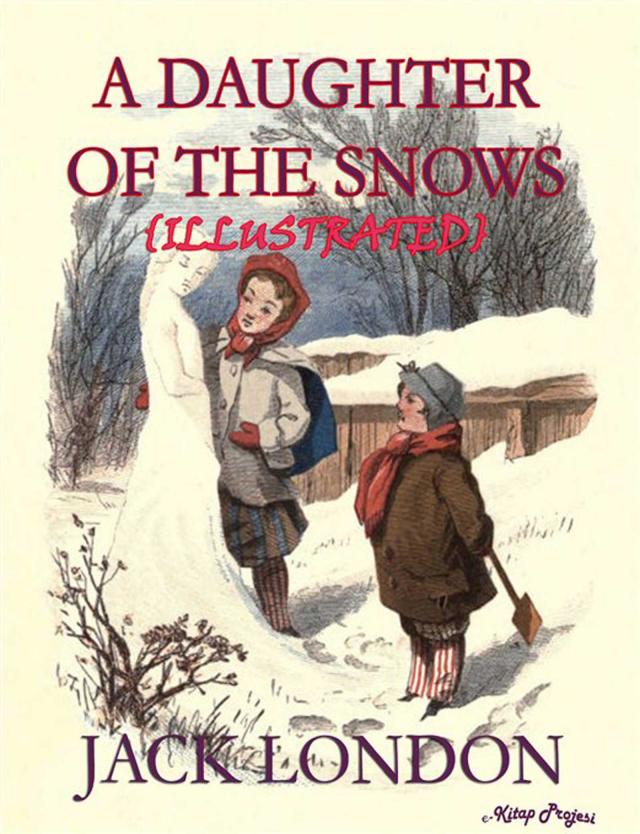
"A Daughter of the Snows" is Jack London's first novel. The novel features a strong female heroine, Frona Welse. Frona was born into a wealthy family and educated at Stanford but she takes to the Yukon trail after upsetting her father and his wealthy community of friends with her out-spoken ways and her innocent friendship with the town's prostitute. "All ready, Miss Welse, though I'm sorry we can't spare one of the steamer's boats." Frona Welse arose with alacrity and came to the first officer's side. "We're so busy," he explained, "and gold-rushers are such perishable freight, at least—" "I understand," she interrupted, "and I, too, am behaving as though I were perishable. And I am sorry for the trouble I am giving you, but—but—" She turned quickly and pointed to the shore. "Do you see that big log-house? Between the clump of pines and the river? I was born there." "Guess I'd be in a hurry myself," he muttered, sympathetically,...
Read online
  • 240
Told in the Hills: A Novel

Told in the Hills: A Novel

Marah Ellis Ryan

Westerns / Classics

Leopold is delighted to publish this classic book as part of our extensive Classic Library collection. Many of the books in our collection have been out of print for decades, and therefore have not been accessible to the general public. The aim of our publishing program is to facilitate rapid access to this vast reservoir of literature, and our view is that this is a significant literary work, which deserves to be brought back into print after many decades. The contents of the vast majority of titles in the Classic Library have been scanned from the original works. To ensure a high quality product, each title has been meticulously hand curated by our staff. This means that we have checked every single page in every title, making it highly unlikely that any material imperfections – such as poor picture quality, blurred or missing text - remain. When our staff observed such imperfections in the original work, these have either been repaired, or the title has been excluded from the Leopold Classic Library catalogue. As part of our on-going commitment to delivering value to the reader, within the book we have also provided you with a link to a website, where you may download a digital version of this work for free. Our philosophy has been guided by a desire to provide the reader with a book that is as close as possible to ownership of the original work. We hope that you will enjoy this wonderful classic work, and that for you it becomes an enriching experience. If you would like to learn more about the Leopold Classic Library collection please visit our website at www.leopoldclassiclibrary.com
Read online
  • 240
Village Annals, Containing Austerus and Humanus: A Sympathetic Tale

Village Annals, Containing Austerus and Humanus: A Sympathetic Tale

Anonymous

Religion / Classics / Nonfiction

Leopold Classic Library is delighted to publish this classic book as part of our extensive collection. As part of our on-going commitment to delivering value to the reader, we have also provided you with a link to a website, where you may download a digital version of this work for free. Many of the books in our collection have been out of print for decades, and therefore have not been accessible to the general public. Whilst the books in this collection have not been hand curated, an aim of our publishing program is to facilitate rapid access to this vast reservoir of literature. As a result of this book being first published many decades ago, it may have occasional imperfections. These imperfections may include poor picture quality, blurred or missing text. While some of these imperfections may have appeared in the original work, others may have resulted from the scanning process that has been applied. However, our view is that this is a significant literary work, which deserves to be brought back into print after many decades. While some publishers have applied optical character recognition (OCR), this approach has its own drawbacks, which include formatting errors, misspelt words, or the presence of inappropriate characters. Our philosophy has been guided by a desire to provide the reader with an experience that is as close as possible to ownership of the original work. We hope that you will enjoy this wonderful classic book, and that the occasional imperfection that it might contain will not detract from the experience.
Read online
  • 238
Arethusa

Arethusa

F. Marion Crawford

Horror / Short Stories / Classics

Carlo Zeno, gentleman of Venice, ex-clerk, ex-gambler, ex-soldier of fortune, ex-lay prebendary of Patras, ex-duellist, and ex-Greek general, being about twenty-nine years of age, and having in his tough body the scars of half-a-dozen wounds that would have killed an ordinary man, had resolved to turn over a new leaf, had become a merchant, and was established in Constantinople in the year 1376. He had bought a house in the city itself because the merchants of Genoa all dwelt in the town of Pera, on the other side of the Golden Horn. A Venetian could not have lived in the same place with Genoese, for the air would have poisoned him, to a certainty; and besides, the sight of a Genoese face, the sound of the Genoese dialect, the smell of Genoese cookery, were all equally sickening to any one brought up in the lagoons. Genoa was not fit to be mentioned within hearing of polite Venetian ears, its very name was unspeakable by decent Venetian lips; and even to pronounce the syllables for purposes of business was horribly unlucky. Therefore Carlo Zeno and his friends had taken up their abode in the old city, amongst the Greeks and the Bokharians, the Jews and the Circassians, and they left the Genoese to themselves in Pera, pretending that they did not even exist. It was not always easy to keep up the pretence, it is true, for Zeno had extremely good eyes and could not help seeing those abominations of mankind on the other side of the Golden Horn when he sat in his balcony on spring evenings; and his only consolation was to dream of destroying them wholesale, of hewing them in pieces by the hundred and the thousand, and of piling up pyramids of their ugly grinning heads. Why were they Genoese? Carlo Zeno would rather have taken a box on the ear from Sultan Amurad, the Turk, over there in Asia Minor, than a civil word from the least objectionable of those utterly unspeakable monsters of Genoese. \'Behold,\' said Tertullian one day in scorn, \'how these Christians love one another.\' Matters had not improved in eleven hundred years, since that learned Doctor of the Church had departed this life, presumably for a more charitable world; but Carlo Zeno would have answered that the Genoese were no more Christians than mules, and much less so than the pigs, which are all under the special protection of the blessed Saint Anthony. At the very time, too, when my story begins, those obnoxious villains of Genoa were on the successful side of a revolution; for they had helped Emperor Andronicus to imprison his father, Emperor John, in the tall Amena tower on the north side of the city, by the Golden Horn, and to lock up his two younger brothers in a separate dungeon. It was true that Emperor John had ordered Andronicus and his little son of five to be blinded with boiling vinegar, but Genoese money had miraculously converted the vinegar into bland white wine, and had reduced the temperature from the boiling point to that of a healthful lotion, so that neither the boy nor the man were any the worse after the application than before; but Andronicus had resented the mere intention on the part of his father, and had avenged himself by taking the Empire, such as it was, for the present, while reserving the delight of murdering his parent and his brothers at a convenient season in the future. All this was very well, no doubt, and Andronicus was undisputed Emperor for the time being, because the Genoese and Sultan Amurad were willing that he should be; but Amurad had not always been his friend, and the Genoese had not always had the upper hand of the Venetians; the wind might change in a moment and a tempest might whirl him away from the throne even more quickly than the fair breeze had wafted him towards it. Zeno thought so too, and wondered whether it would please fate to make him the spirit of the storm.
Read online
  • 237
Under Cover

Under Cover

Wyndham Martyn

Mystery / Classics

This scarce antiquarian book is a facsimile reprint of the original. Due to its age, it may contain imperfections such as marks, notations, marginalia and flawed pages. Because we believe this work is culturally important, we have made it available as part of our commitment for protecting, preserving, and promoting the world\'s literature in affordable, high quality, modern editions that are true to the original work.
Read online
  • 235
183