

The angel of auschwitz, p.21
The Angel of Auschwitz, page 21


The candle had been part of her evening ritual for many years. She lit it after shifts at the hospital in New York, after evenings filled with the cries of newborns and the exhausted breaths of mothers. She lit it in quiet apartments through long nights when the past pressed close. The flame had become a point of stillness, a moment that belonged to no one but her. It remained a small promise she made to herself each night, a promise of remembrance rather than prayer.
The light flickered across the room, warming the edges of the framed photographs on the shelf and catching on the glass of a vase beside them. A faint smell of melting wax drifted upward. She watched the flame for a long moment, then leaned back in her chair, feeling the familiar curve of the cushion against her spine.
Outside, the city settled into its evening breath. A soft wind stirred the leaves of the trees along the street, and the distant sound of traffic reached her through the partly open window. The voices of children playing far below faded gradually as their parents called them inside. In the apartment beside hers, someone closed a door with gentle care.
Gisella let her hands rest loosely in her lap. Her fingers curled slightly, not from tension but from the natural weight of age. She breathed in slowly, then released the air in a long, quiet exhale. Her chest rose and fell with a rhythm that had steadied her through many years, a rhythm learned in the old hospital in New York, in the Belgian convent before that, and on the long walk from the gates of the camp when she had first stepped into a world where she no longer knew how to exist.
The flame moved slightly, swayed by a whisper of air from the window. Its light settled across her hands, softening the thin lines along her skin. She felt the warmth but did not reach toward it. Instead, she allowed the glow to rest upon her, as if the flame were placing its own small hand across hers.
Her gaze drifted toward the window. She could see the lights of Jerusalem stretching across the hills, forming scattered clusters of gold. The city breathed with a depth that came from centuries of prayers and silence and unspoken stories. She had lived here for many years, and she still felt the weight of those ancient layers whenever she looked out across the rooftops.
She had brought her story into one of those rooms today. She had spoken it aloud to students whose faces would remain in her mind for a long time. She had let the truth rise from the place where she had held it for decades. Now, in the quiet of her home, she felt the release that followed. It was not relief. Relief never came. It was something closer to rest.
When she closed her eyes she saw the shapes of the women she had treated in the camp. Their faces appeared like shadows, mere impressions. The sound of the wind outside drifted into her memory and mingled with faint breaths, the murmurs of women on straw mattresses, the soft rustle of thin blankets. She did not try to gather the memories into order. They came as they wished, sometimes clear, sometimes faint, sometimes heavy enough to press into her chest. She did not push them away. She simply allowed them to pass through her.
She saw her Gabriella standing in the reception centre in Belgium, thin and pale, her eyes searching the crowded room. She felt again the moment their eyes met. The shock of it still lived inside her, the shock of a miracle she had not expected to receive. Gabriella had grown into a woman whose strength came from both survival and renewal. And now her grandchild had sat in the lecture hall, listening to a story that had once been too sharp to speak.
Gisella opened her eyes.
The candle flame held steady, a small and unwavering point in the room. It had the calm presence of something that understood time, something that would burn until the very last moment of its wick. The light touched the far wall, tracing a faint reflection across the smooth surface.
Gisella placed her hands together slowly, the gesture soft and deliberate. Her fingers interlaced naturally in remembrance rather than prayer. It was a gesture she had made alone for many years, first in secret, then as habit, then as ritual. A gesture that belonged to the women she had known in the darkness, and to her own need to carry them forward.
Her breath deepened. The quiet around her grew full. She felt the weight of the day settle into her bones, not as burden but as truth.
She thought of the students in the hall, their faces astonished and sombre. She thought of the questions they might ask later, the discussions that would unfold in the days to come. She thought of her granddaughter, her eyes wide, her voice trembling as she whispered a single word. Grandma. A word that bridged past and present with a tenderness that reminded her of the candle’s flame.
The faint hum of the city rose and fell beneath the window.
She continued to sit with her hands joined, her gaze steady upon the flame. The candle shifted slightly as a breeze touched it, then regained its form. She breathed in. She breathed out.
The city lights shimmered faintly. The candle burned with patient certainty.
Gisella remained still, allowing the quiet to wash through her. She did not think of all she had endured or speak the names of those she had lost. She simply held them in her hands, in her breath, in the stillness of the room.
Outside, Jerusalem exhaled into the night.
Inside, the flame remained steady, casting its warm glow around her. She sat at the window, framed by that gentle light, her hands together in remembrance, her gaze on the city that lived and breathed beneath her.
And in that quiet room, held by darkness and flame, she allowed herself to rest.
AUTHOR’S NOTE
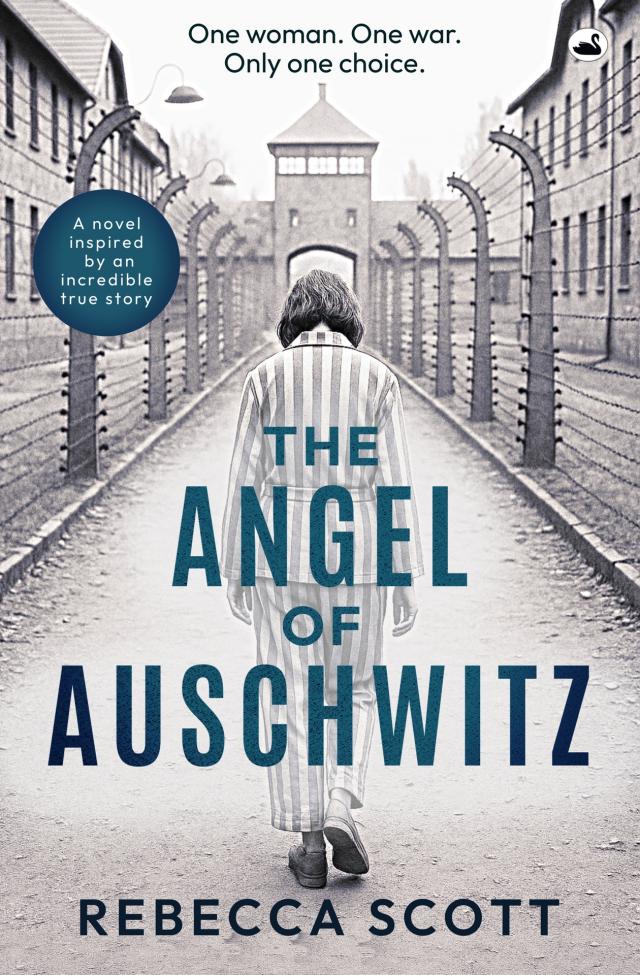
This book is inspired by the extraordinary life of Dr Gisella Perl, a Hungarian-Jewish gynaecologist whose courage shone from within one of history’s darkest places.
In 1944, Gisella was deported with her husband, parents, and children to Auschwitz-Birkenau. Her husband and son were sent to their deaths on arrival; her daughter was torn from her arms. Because she was a physician, Gisella was forced to work under Dr Josef Mengele, the SS doctor notorious for his experiments on women and twins. In this position, she witnessed the systematic murder of pregnant women and their unborn children.
Faced with an impossible choice, she made a decision that defied the machinery of extermination: to save mothers by ending their pregnancies in secret. With no instruments, no medicine, and no light but a flickering candle, she performed operations on the filthy floors of the barracks, sometimes with her bare hands. Her actions spared hundreds of women from the torture chambers and the gas chambers, though the cost to her conscience was lifelong.
When the camp was liberated, Gisella discovered that almost everyone she loved was gone. For a time, she wished to die. Yet she survived, and she chose life, not only for herself, but for the thousands of children she would later deliver into the world as an obstetrician in New York. Each birth, she said, was a prayer of atonement.
Dr Perl’s memoir, I Was a Doctor in Auschwitz, first published in 1948, remains one of the most powerful testaments of female resistance during the Holocaust. Her story is not one of triumph over evil, since evil cannot be undone, but of moral courage, sacrifice, and the fragile endurance of hope.
In writing this novel I have drawn faithfully upon the facts of her life while imagining the emotional landscape behind them: the daily terror of deception, the unbearable choices between two forms of death, and the quiet, steadfast rebellion of a healer who refused to let the world become entirely barren.
To remember Gisella Perl is to remember the women she saved and the countless others she could not. Her legacy reminds us that even in a place built to annihilate compassion, humanity could still take root in a single pair of hands.
HAVE YOU READ?
Rebecca Scott’s powerful historical thriller The Angel Of Warsaw?
BUY NOW
A NOTE FROM THE PUBLISHER
Thank you for reading! We hope you enjoyed this book. If it left an impression, we’d love for you to share your thoughts in a review on Amazon—your feedback helps other readers discover it too.
At Black Swan Digital, we’re redefining storytelling with fresh, exciting releases at unbeatable prices. Plus, our community gets exclusive discounts and early access to new books. Want in? Join our mailing list here and never miss a great read!
Rebecca Scott, The Angel of Auschwitz






